

Last updated: 28 October 2026
Vaping.news content is for adults aged 18 and over. Vaping products are for adult smokers. Nicotine is a highly addictive substance, and vaping is not risk-free.
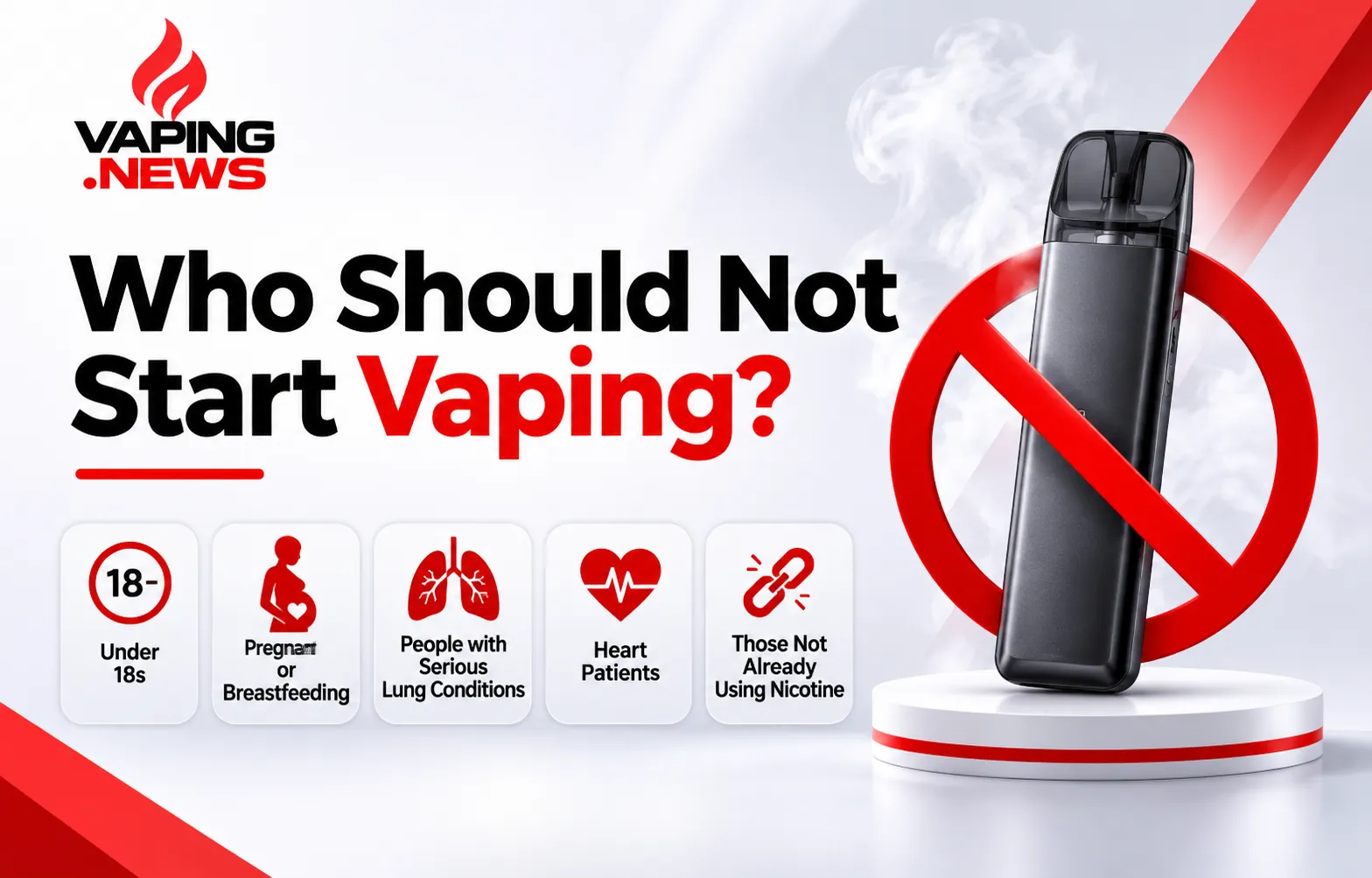
Non-smokers, anyone under 18 and people who have never smoked are the groups who are not to start vaping: UK health bodies recommend vaping only for adults who smoke and want to stop smoking. NHS Better Health states plainly that children and non-smokers are never to vape, and that non-smokers and young people under 18 are not to take up vaping. For pregnant women who smoke, the position is more nuanced: licensed nicotine replacement therapy (NRT) is the recommended first option, vaping is likely to be less harmful than continuing to smoke, and the right next step is a conversation with a midwife or stop smoking adviser.
Vaping.news sets out below who vaping is not for, why, what the evidence says about pregnancy, what UK law says about under-18s, and when a GP or pharmacist is the right person to ask before you start.
Who Is Vaping For?
Vaping is for adults who currently smoke tobacco and want a less harmful way to get nicotine while they stop smoking. Every major UK source agrees on this point, and 4 of them put it in clear terms:
- NHS Better Health: describes nicotine vaping as less harmful than smoking and advises that non-smokers and young people under 18 do not take up vaping.
- OHID evidence review: the 2022 evidence update by King’s College London for the Office for Health Improvement and Disparities found a substantial reduction in toxicant exposure when smokers switch completely, but stated that vaping is not risk-free, “particularly for people who have never smoked”.
- NCSCT guide: the National Centre for Smoking Cessation and Training vaping guide (January 2025) puts the message in 5 words: “if you don’t smoke, don’t vape”.
- Royal College of Physicians: the April 2024 evidence review calls e-cigarettes an effective treatment for tobacco dependency, while recommending measures to discourage people who do not smoke from taking up vaping.
The benefit of vaping is entirely relative. Vaping reduces harm only when it replaces something far more harmful, which is smoked tobacco. For anyone who does not smoke, there is no harm to reduce, so vaping adds risk with no health gain. The page on NHS guidance on vaping to quit smoking sets out the official position in full.
Who Is Not to Start Vaping?
There are 5 groups who are not to start vaping, according to UK health guidance. The table below sets out each group and the main reason.
| Group | Main reason |
|---|---|
| People who have never smoked | No smoking harm to reduce; vaping adds nicotine dependence and unknown long-term risk |
| Children and anyone under 18 | Illegal to sell vapes to them; the NHS says children are never to vape |
| Ex-smokers who quit without vaping | Vaping reintroduces a nicotine habit they have already broken |
| Pregnant women who do not smoke | No benefit; little research on vaping in pregnancy |
| Non-smokers curious about flavours or trends | Curiosity and social use are not health reasons to start |
Adult smokers with health conditions are not on the list. The NHS page on using e-cigarettes to stop smoking describes vaping as far less harmful than cigarettes, and a GP or pharmacist helps them choose the right quit method.
Why Do Non-Smokers Not Need to Vape?
Non-smokers do not need to vape because vaping exposes the user to nicotine and other substances that a non-user avoids entirely. The OHID 2022 evidence update found “higher absolute exposure to toxicants from vaping, compared with not using any nicotine products”. Vaping exposes users to far fewer toxicants than smoking, but to more than breathing clean air. Three main reasons apply to non-smokers:
- Nicotine dependence: the OHID review found that using vaping products can result in symptoms of nicotine dependency. A non-smoker who starts vaping acquires an addiction they did not have.
- Unknown long-term effects: NHS Better Health states that vaping is not completely harmless and that the long-term effects are not yet known. Most studies cover the short and medium term only.
- Oral health: the OHID review found vaping detrimental to oral health in people who have never vaped or smoked, while smokers who switch are likely to benefit.
The same logic applies to nicotine-free vaping. A 0 mg/ml e-liquid removes nicotine dependence from the picture, but inhaling heated propylene glycol, glycerine and flavourings is not a health activity. Non-smokers gain nothing from it. The guide to e-liquid ingredients lists what vapour contains.
Can Under-18s Vape?
No. From 29 October 2026, selling any vape, including nicotine-free vapes, or a nicotine product to anyone under 18 is illegal across the UK, according to the Department of Health and Social Care. The NHS says e-cigarettes cannot be sold to people under 18, and NHS Better Health states that children are never to vape.
Buying, or trying to buy, a vaping or nicotine product for someone under 18 is an offence under section 11 of the Tobacco and Vapes Act 2026 in England and Wales, in force from 29 October 2026. A ban on vape advertising and sponsorship is due to start on 1 June 2027, subject to secondary legislation, according to the same DHSC announcement. The UK vape laws guide tracks each date.
Young people are a particular concern for 3 reasons:
- Legal protection: UK law bans the sale of all vapes and nicotine products to under-18s.
- Addiction risk: the OHID review found that vaping can cause symptoms of nicotine dependency, and a young person who starts gains a habit with no health benefit.
- Gateway concern: the US National Academies of Sciences, Engineering, and Medicine found in 2018 “substantial evidence” that e-cigarette use by youth and young adults increases their risk of ever using conventional cigarettes. UK law keeps vapes away from under-18s either way.
A young person who already vapes and wants to stop can get support. Parents, schools and young people can speak to a GP or school nurse for advice on stopping.
What About People Who Have Never Smoked?
People who have never smoked are the group with the most to lose and nothing to gain from vaping. The OHID review singled them out by name when it stated that vaping is not risk-free, “particularly for people who have never smoked”.
The OHID report found that most young people who had never smoked were not currently vaping (98.3%), so never-smokers who vape are a minority. Even so, they are the group public health campaigns most want to protect. Curiosity about flavours, peer use and social media content are not health reasons to start. The page on vaping myths and facts tackles common claims that draw non-smokers in.
What About Ex-Smokers Who Have Quit?
Ex-smokers who have quit completely without vaping do not need to start. Taking up vaping after stopping with patches, medication or willpower reintroduces a nicotine habit you have already broken.
Ex-smokers who use a vape right now to stay off cigarettes are in a different position. NHS Better Health advises aiming to quit vaping once you feel sure you will not go back to smoking, and staying off cigarettes comes first. A stop smoking adviser can help you plan a gradual step down in nicotine strength when cravings are strong.
What Do UK Bodies Say About Vaping in Pregnancy?
UK bodies say that licensed NRT, such as patches and gum, is the recommended option for pregnant women who smoke, but that vaping is much less risky than smoking and pregnant women who vape to stay smoke-free deserve support. The table below sets out 4 sources.
| Source | Position on vaping in pregnancy |
|---|---|
| NHS pregnancy guidance | “If using an e-cigarette helps you to stop smoking, it is much safer for you and your baby than continuing to smoke.” Free expert help from a stop smoking adviser is available to women who use an e-cigarette. |
| NHS Better Health | Little research exists, but vaping is likely to be less harmful for mother and baby than smoking, and vapes do not produce carbon monoxide. Licensed NRT is the recommended option. |
| Smoking in Pregnancy Challenge Group (resources updated December 2024) | Licensed NRT is the recommended option. Vapes appear more effective for quitting than nicotine patches, and a pregnant woman who vapes to quit and stay smokefree is to be supported. |
| NCSCT vaping guide (January 2025) | Very little research exists on vaping safety in pregnancy. The NCSCT reports that vapes have a similar safety profile to NRT in pregnancy. |
The Challenge Group position comes from its guidance on vaping before, during and after pregnancy. Pregnancy is not a reason to switch from vaping back to smoking. Carbon monoxide is particularly harmful to developing babies, and vapes do not produce it. NHS Better Health states: “The most important thing is to not smoke when pregnant or around pregnant women.”
Pregnancy changes the route to advice. Tell your midwife if you are pregnant and smoke, or were already vaping when you became pregnant. The NHS pregnancy guidance says a midwife can refer you for stop smoking support, and the National Smokefree Helpline is on 0300 123 1044. A pregnant woman who has never smoked or vaped has no reason to start.
After the birth, the Challenge Group briefing for maternity professionals says there is no reason to believe vaping would compromise breastfeeding, and suggests avoiding vaping directly around babies when feeding them.
Who Needs to Speak to a GP First?
Adult smokers with a long-term health condition, or who take regular medication, benefit from speaking to a GP, pharmacist or stop smoking adviser before switching. The reason to ask is practical: a professional who knows your history helps you pick the quit method that suits you best. Five situations call for a conversation first:
- Heart conditions: the OHID review found the cardiovascular risk of vaping is uncertain, though expected to be much lower than smoking.
- Lung conditions: people with asthma or COPD who notice coughing or breathlessness after vaping benefit from tailored advice.
- Regular medicines: stopping smoking changes how the body processes some medicines, such as clozapine and theophylline, according to the MHRA Drug Safety Update, so your GP or pharmacist needs to know.
- Mental health conditions: a GP or specialist can plan stop smoking support around your treatment.
- Pregnancy or planning pregnancy: speak to a midwife or GP, as set out above.
For most adult smokers, the risk of continuing to smoke is far greater than any risk of switching. The aim of a GP conversation is to choose the right support, not to find a reason to keep smoking.
Is Vaping Risk-Free for Anyone?
No. Vaping is not risk-free for anyone, including adult smokers who switch. NHS Better Health describes vaping as less harmful than smoking but “not completely harmless”, and the NHS says the liquid and vapour contain some potentially harmful chemicals found in cigarette smoke, at a much lower level. The OHID review found that switching completely from smoking to vaping leads to a substantial reduction in biomarkers of toxicant exposure, but not zero exposure.
The message to smokers and non-smokers differs for that reason. For a smoker, vaping is a step down in risk. For a non-smoker, vaping is a step up. The page on vaping vs smoking compares the 2 in detail.
What Are the Common Side Effects?
The common side effects of vaping are coughing, a dry mouth and throat, mouth and throat irritation, shortness of breath and headaches, according to NHS Better Health. The NCSCT adds feeling sick to the list and notes that these effects tend to reduce over time as people continue vaping.
For an adult smoker, these effects are usually manageable and are not a reason to go back to cigarettes. Speak to a stop smoking adviser or specialist vape retailer when side effects persist, and report any suspected health-related side effect through the MHRA Yellow Card scheme, as the NHS advises. For a non-smoker, side effects are an avoidable cost of a habit with no benefit.
How Do You Keep Vapes Away From Children and Pets?
You keep vapes away from children and pets by storing devices, pods and e-liquid bottles out of reach and out of sight, in the same way as medicines. Follow these 5 steps:
- Close e-liquid bottles with their child-resistant caps fully secured.
- Store devices and refills in a high cupboard or locked drawer, not on a sofa arm or bedside table.
- Keep e-liquid in its original labelled bottle, never in drinks bottles or unlabelled containers.
- Avoid vaping around babies and young children.
- Call 999 or go to A&E if you think a child has swallowed e-liquid, in line with NHS poisoning advice, and call NHS 111 if you are not sure whether something swallowed is harmful.
Child-resistant, tamper-evident packaging is a legal requirement for nicotine e-liquid under regulation 36 of the Tobacco and Related Products Regulations 2016, but safe storage still matters.
What Are the Alternatives for Smokers Who Prefer Not to Vape?
There are 4 main alternatives for smokers who prefer not to vape: licensed NRT, prescription stop smoking medicines such as varenicline and cytisine, behavioural support and combinations of these.
Vaping is one route among several. The Cochrane review (updated 26 August 2026) found high-certainty evidence that nicotine e-cigarettes help more people stop smoking than NRT, at about 8 to 10 quitters per 100 against about 6 per 100, but NRT and medication remain proven options. The best method is the one that keeps you off cigarettes.
Where Can You Get Help?
You can get free help from your local NHS Stop Smoking Service, the National Smokefree Helpline (0300 123 1044), your GP, your pharmacist or, in pregnancy, your midwife. Stop Smoking Services advise on devices and nicotine strengths, and NHS Better Health says some offer a free vaping starter pack to adult smokers. Adult smokers ready to switch can follow the guide on starting vaping as an adult smoker.
The short version: vaping is a far less harmful way for smokers to get nicotine while they quit, and people who do not smoke do not need to start.
What Are the Frequently Asked Questions About Who Is Not to Vape?
Is vaping safe for non-smokers?
No. Vaping is not safe for non-smokers. The OHID review (2022) found higher absolute exposure to toxicants from vaping compared with not using any nicotine products. Non-smokers who vape gain nicotine dependence and unknown long-term risk with no health benefit, so UK health bodies advise them not to start.
Can I vape if I have never smoked?
No. People who have never smoked are advised not to vape by the NHS, OHID and the NCSCT. Vaping is a harm reduction tool for smokers, and never-smokers have no smoking harm to reduce. Starting adds nicotine addiction and risks that a never-smoker otherwise avoids completely.
Is nicotine-free vaping safe for non-smokers?
No. Nicotine-free vaping is not a safe habit for non-smokers. A 0 mg/ml e-liquid removes nicotine dependence, but the user still inhales heated propylene glycol, glycerine and flavourings with unknown long-term effects. From 29 October 2026, selling nicotine-free vapes to under-18s is illegal in the UK.
Is it illegal for a 16-year-old to vape?
No. Vaping itself is not a crime for a 16-year-old, but selling vapes to anyone under 18 is illegal, and buying vapes for them is a proxy purchasing offence. NHS Better Health states that children are never to vape. Schools and parents can seek stopping support from a GP or school nurse.
Can I vape while pregnant?
Yes, for pregnant smokers who use a vape to stay smoke-free, though licensed NRT is the recommended option. The NHS says that if an e-cigarette helps you stop smoking, it is much safer for you and your baby than continuing to smoke. Pregnant women who have never smoked are not to start vaping. Speak to your midwife about the right quit plan.
Can I vape while breastfeeding?
Yes, for a mother who would otherwise smoke. The Smoking in Pregnancy Challenge Group says there is no reason to believe vaping would compromise breastfeeding, and that a mother whose vape keeps her smokefree can carry on with it while breastfeeding. As a precaution, avoid vaping directly around babies when feeding them, and ask your midwife or health visitor for advice.
Can people with asthma vape?
Yes, adult smokers with asthma can use vaping to quit smoking, but they benefit from GP or stop smoking advice first. Smoking is far more harmful than vaping. Non-smokers with asthma are not to start vaping, because mouth and throat irritation, coughing and shortness of breath are common side effects.
Can people with heart disease vape?
Yes, adult smokers with heart disease can use vaping to quit, and the OHID review (2022) expects cardiovascular risk from vaping to be much lower than from smoking, though uncertain. Speak to your GP or cardiac team before switching, because they know your condition and medicines.
Why does the NCSCT say if you don’t smoke, don’t vape?
The NCSCT says “if you don’t smoke, don’t vape” because vaping only reduces harm when it replaces smoking. For a non-smoker, vaping adds nicotine dependence and uncertain long-term risk. The message protects young people and never-smokers while keeping vaping available to adult smokers who want to quit.
Does vaping lead young people to smoking?
The US National Academies (2018) found substantial evidence that e-cigarette use by youth and young adults increases their risk of ever using conventional cigarettes. Whatever the size of that effect, UK law bans the sale of all vapes to under-18s, and UK health bodies advise young people not to vape.
Can I start vaping to lose weight?
No. Vaping is not a weight loss method, and UK health bodies do not recommend vaping for anyone who does not smoke. Starting a nicotine habit to control weight adds addiction and uncertain long-term risk. Speak to a GP about safe weight management options.
What do I do if a child swallows e-liquid?
If you think a child has swallowed e-liquid, call 999 or go to A&E, as NHS poisoning advice sets out. Call NHS 111 if you are not sure whether what was swallowed is harmful. Take the bottle or packaging with you to show the strength and volume to doctors.
Do ex-smokers who vape need to stop vaping?
Yes, in time. Ex-smokers who vape are advised to aim to stop vaping once they feel sure they will not return to smoking. NHS Better Health sets no deadline, and staying off cigarettes comes first. A stop smoking adviser can help plan a gradual reduction in nicotine strength.
Can teenagers who smoke use a vape to quit?
No. Vapes cannot be legally sold to under-18s in the UK, so teenagers who smoke need support from a GP or stop smoking service, not a vape bought illegally. A GP or stop smoking adviser can discuss support suited to a young person.
Where can a non-smoker who vapes get help to stop?
A non-smoker who vapes can get help to stop from a GP, a pharmacist or a local stop smoking service. Gradually lowering nicotine strength and planning for triggers both help. The National Smokefree Helpline on 0300 123 1044 gives free advice.
2 thoughts on “Who Should Not Start Vaping?”
Comments are closed.